
How to Search Hillsborough County Traffic Court Records
Most traffic cases in Hillsborough County run through the Circuit Court District Division. When a case type is open to public view, you can look it up on the New Hampshire Case Access Portal. The portal shows non-confidential court case data, including many violation and motor-vehicle matters. It can show active cases, closed cases, and the disposition once the court enters it. Not every ticket type appears online. Some local parking or ordinance matters are handled by the town or city, not the court portal.
Have your details ready before you start. The citation or ticket number gives the cleanest hit. A case number works too. With only a name, you can still search, but expect more than one match. A date of birth helps narrow identity where the portal allows it.
- Open the Case Access Portal and read the access notice.
- Enter the citation or ticket number, or use the defendant name if you have no number.
- Narrow by court location or date when the result list runs long.
- Open the matching case and review the charge, plea, hearing date, and disposition.
- For a certified copy or for a case that does not appear online, contact the clerk for the court of record.
If a case will not load or the case type is not public, the next step is the clerk. Use the court locator to confirm which court holds the file.
Note: Online entries can post before the clerk finishes processing. Do not rely on a portal entry until the court has issued formal notice.
Which Courts Handle Traffic Cases in Hillsborough County
Traffic tickets in New Hampshire generally route through the Circuit Court District Division. This is the lower trial court that hears violations, small claims, and many misdemeanors. In Hillsborough County the District Division sits in more than one location, and the right court depends on where the ticket was written. Some parking and local ordinance matters are not court cases at all. A town or city may handle them. The citation tells you where to respond.
A serious motor-vehicle case can land in a different court than a simple speeding ticket. A misdemeanor motor-vehicle charge may carry a court appearance. A DUI or DWI is criminal and follows the criminal track. Confirm the court with the official locator rather than guess.
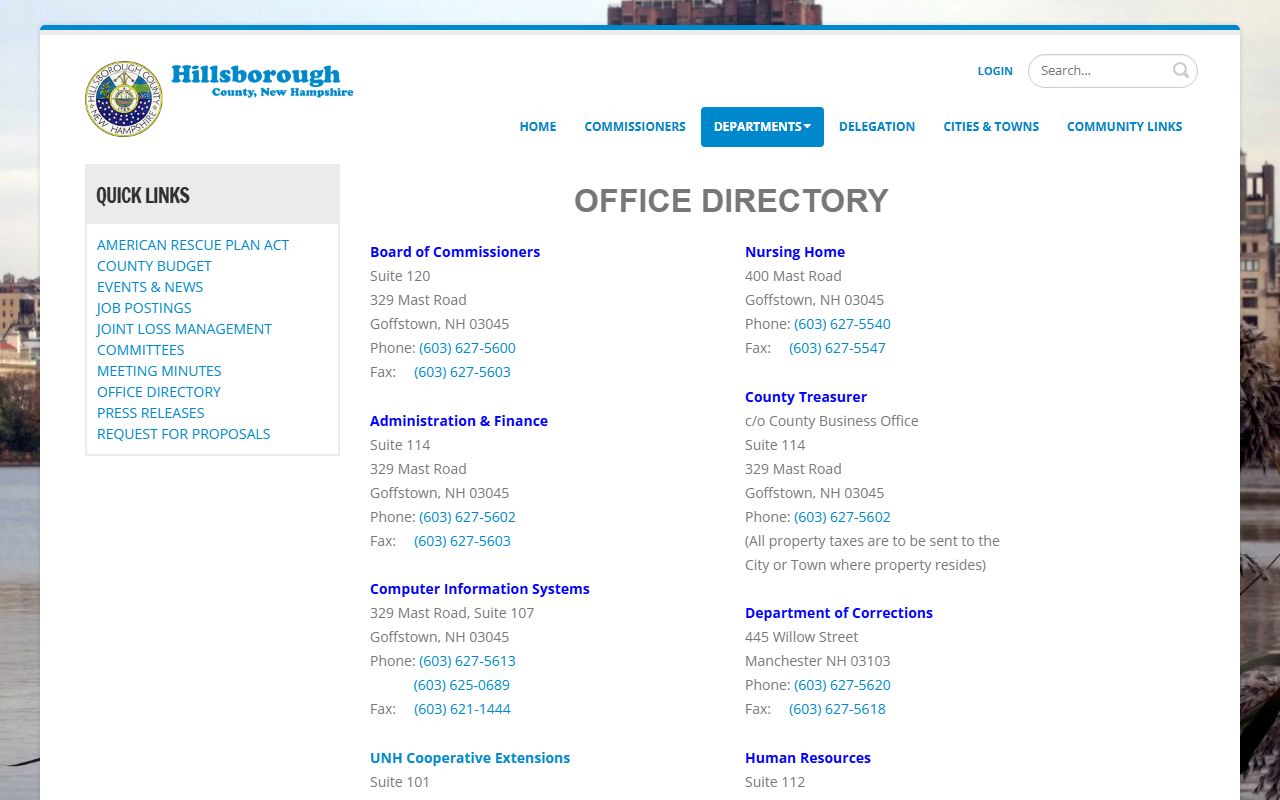
The image above shows the Hillsborough County government delegation page. County government and the state courts are separate. The county runs offices like the delegation and the jail. The District Division court that hears your ticket is part of the state Judicial Branch. For court locations and hours, the District Division resources page is official.
Types of Traffic Cases on Record
Traffic records cover a wide range of motor-vehicle matters. Some are minor violations with a set fine. Others are misdemeanors that can carry a court date and a possible jail term. The list below sorts the common types you may find in a Hillsborough County traffic court search.
- Moving violations - speeding, failure to yield, running a light, and similar charges that can be reported to the DMV.
- Misdemeanor motor-vehicle charges - more serious offenses that may require a court appearance.
- DUI / DWI - criminal cases, not routine tickets, handled on the criminal track.
- CDL and commercial cases - charges against commercial drivers, where reporting rules are stricter.
- Equipment and non-moving violations - defects, registration, and inspection issues.
- Speed-related violations - posted limit and reasonable-speed charges that vary by amount over the limit.
A parking ticket from a town or city often is not in this group. Many of those are civil or administrative. Read the notice to see who handles it.
What Hillsborough County Traffic Court Records Show
A traffic court file is built around one citation. It lists who was charged, what statute or ordinance was cited, and how the case moved through the court. The table below lists the fields a Hillsborough County traffic court record typically holds and what each one tells you.
| Field | What It Shows |
|---|---|
| Citation Number | The ticket number written by the officer at the stop. |
| Case Number | The number the court assigns when the case is opened. |
| Defendant Name and Address | The driver named on the ticket, where the data is public. |
| Date, Time, and Location | When and where the alleged offense took place. |
| Statute or Ordinance | The law or local rule the driver is charged with breaking. |
| Officer / Agency | The officer who wrote the ticket and the agency they work for. |
| Plea | The driver's response: guilty, not guilty, or no contest where allowed. |
| Hearing Date | The date and time of any scheduled court hearing. |
| Disposition | The outcome of the charge, such as found guilty, dismissed, or paid. |
| Fine / Penalty | The fine and court costs, with payment status where shown. |
| License-Related Order | Any court order touching the license, where the court enters one. |
| Failure-to-Appear Entry | A default or missed-hearing note if the driver did not respond. |
| Appeal / Motion Entries | Later filings, such as a motion or a notice of appeal. |
Not every field shows on every case. A ticket paid early may show only the charge, the fine, and the disposition. A contested case will fill in the plea, hearing, and order rows as the matter moves along.
Searching by Citation Number vs by Name
The citation number is the cleanest search key. It points at one ticket and one case. A name search is broader. In Manchester or Nashua, a common name can return many people, and you may not know which record is yours without more detail. A date of birth or court location helps narrow it. The table below lists the search fields a traffic lookup may offer.
| Search Field | Type | Required | Notes / Format |
|---|---|---|---|
| Citation / Ticket Number | Text | No | Best key. Copy it exactly from the printed ticket. |
| Case Number | Text | No | Court-assigned number from a notice or summons. |
| Defendant Name | Text | No | Use the full legal name. Expect more than one match. |
| Date of Birth | Date | No | Narrows identity where the portal allows it. |
| Court Location | Filter | No | Pick the District Division location for the ticket. |
| Search | Button | Yes | Runs the query when the case type is public. |
When a name search floods you with results, add the court location and a date range. That usually clears the noise fast.
Paying or Contesting a Hillsborough County Traffic Ticket
A ticket gives you a choice. You can admit the charge and pay, or contest it and ask for a hearing. Each path has a deadline printed on the citation. Miss it and the case can go to default, which often costs more than the ticket and can touch your license. Paying is usually treated as an admission. That matters because the disposition can be reported and may affect your driver record. Read the ticket before you decide. The steps below follow the process from the citation through the hearing.
- Read the citation for the court, the plea options, and the response deadline.
- Use the official court or ticket instructions, not a random payment site.
- If you admit the charge, pay through the official method and keep the receipt.
- If you contest, enter the required not-guilty response and wait for the court notice.
- Attend the hearing, or ask the court for a continuance before the hearing date.
- If you hold a CDL, seek legal advice, since commercial consequences can be stricter.
- Confirm any DMV consequences separately if the outcome affects your license.
A not-guilty plea is not the end of the matter. It creates a hearing duty. Skipping that hearing can leave you worse off than if you had paid the ticket.
Public Access Laws for Traffic Court Records
Court records and ordinary government records follow different rules in New Hampshire. Court case data is searched through the Judicial Branch portal and the clerk, under court rules and confidentiality statutes. The state's open-government law, the Right-to-Know Law at RSA 91-A, is the default for executive and local government records, not the full path for court files. A traffic court case is reached through the court system, while a county or town government record runs under RSA 91-A.
One more layer. A court name search is not an official background check. Criminal history dissemination is controlled by separate law, and a routine traffic case file is not a complete criminal record.
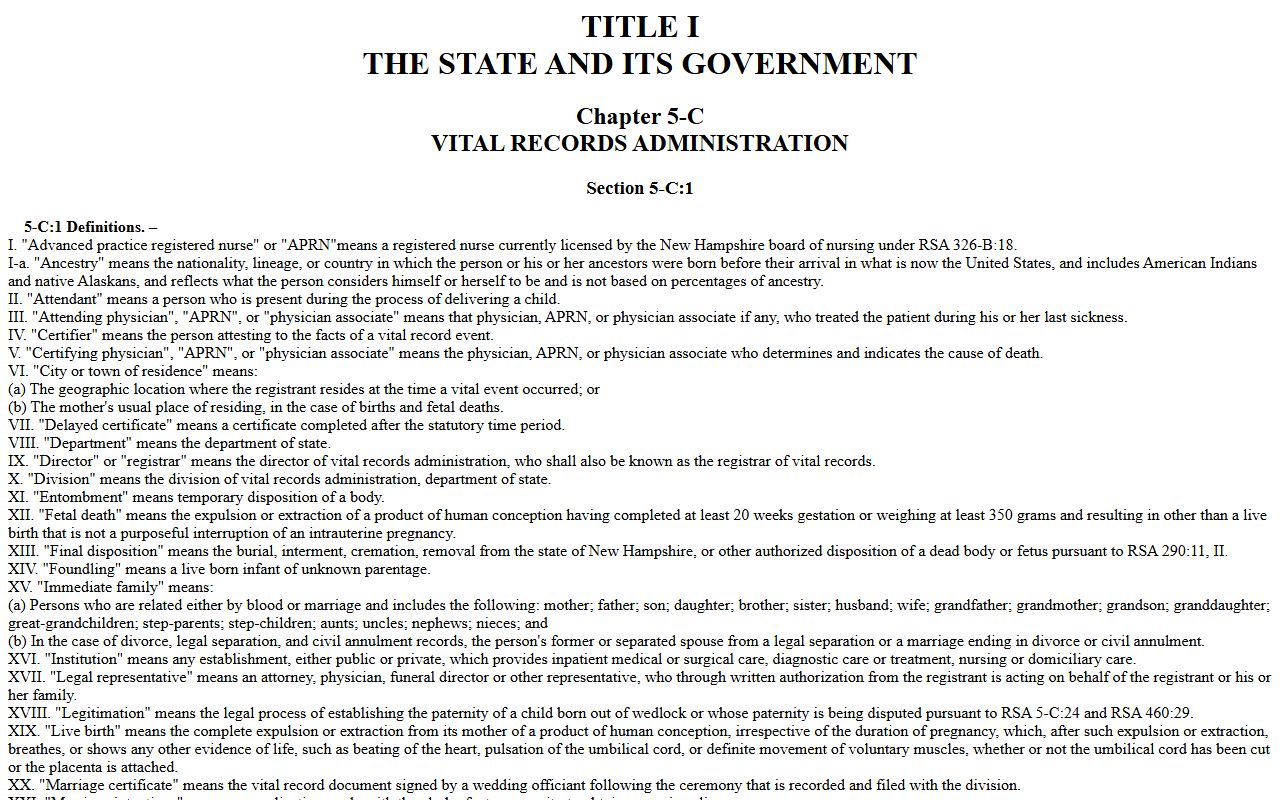
The image above shows a New Hampshire RSA statute page on the state legislature site. Statutes set who can see what and when. For records access, the framework blends the Right-to-Know Law, court rules, and case-specific privacy statutes. When in doubt about access to a traffic file, the clerk for the court of record is the right place to ask.
Court Traffic Records vs State Driver Records
This is the split that trips people up. The court traffic record is the case file for the citation. The state driver record is held by the New Hampshire DMV and tracks license status and reported convictions. They serve different jobs and live with different custodians. A clerk certifies the court file. The DMV produces the driver abstract. They are not interchangeable.
| Issue | Court Traffic Record | NH DMV Driver Record |
|---|---|---|
| Custodian | Court handling the citation | New Hampshire DMV |
| Purpose | Resolve the charge or citation | Track license status and driver history |
| Hearing Date | Yes, if one is scheduled | Usually not shown |
| Plea / Disposition | Yes, shown in the file | Shows reportable convictions and actions |
| Fine / Court Costs | Yes, with payment status | Not detailed like the court file |
| Points / Suspension | May show an order or disposition | Primary source for license status and points |
| Certified Copy | Court clerk | DMV |
| Search Key | Citation or case number, name | Driver license number, identity |
If you need proof of how a case ended, use the court file. If you need license status or points, go to the DMV. For broader case lookups, see Hillsborough County court records.
CDL and Commercial Driver Records
Commercial drivers face stricter rules. A CDL holder should not assume the ordinary plea or deferral options apply to a commercial case. Federal and state reporting rules can be strict, and some violations carry consequences a regular driver would not face for the same charge. A conviction can affect the commercial license even when the ticket seems minor. The stakes are high, so a CDL holder should seek legal advice before paying or pleading.
DUI and DWI Cases
DUI and DWI are criminal cases, not routine traffic tickets. They follow the criminal track and can carry jail, license loss, an ignition-interlock order, higher insurance, and a lasting criminal record. A DWI is not handled like a speeding ticket, and it should not be searched as a simple violation.
For full Hillsborough County DUI and DWI case information, see Hillsborough County criminal records.
Deferred and Alternative Dispositions
Some courts offer alternatives to a straight guilty plea, but options vary by court and by charge. Do not assume a specific program exists for your ticket. Verify with the court that holds your case before you count on any alternative, and ask what it would mean for your record. A not-guilty plea creates a hearing duty, so choosing to contest is a commitment to show up. Weigh options before the deadline, and confirm any effect on the driver record with the DMV separately.
Sealing or Annulling Traffic Records
New Hampshire uses the word "annulment" rather than expungement. The process under RSA 651:5 lets a person ask the court to annul eligible records. Eligibility depends on the offense, the disposition, and later conduct, with waiting periods that differ by case. A minor traffic violation is treated differently from a criminal motor-vehicle charge, and not every record can be cleared. A DWI or other criminal motor-vehicle matter follows the criminal annulment path, which is more involved than a simple ticket.
Once a record is annulled, access and disclosure rules change, though court and law-enforcement exceptions can still apply. To start, the court's self-help forms explain the steps and the paperwork. Confirm eligibility with the clerk before you file.
Fees for Traffic Record Copies
Copy fees apply when you want paper from the file. A plain copy and a certified copy are priced differently, and a certified copy is the one you need for legal proof. The court clerk sets copy fees under the current Judicial Branch schedule. A DMV driver abstract is priced on its own schedule. Amounts change, so confirm the current cost before you pay.
Note: Confirm current copy and certified-copy fees with the court clerk, and confirm driver-abstract fees with the New Hampshire DMV. Court copies and DMV abstracts are priced separately.
One source does not cover both records. A court clerk cannot quote a DMV abstract price, and the DMV does not set court copy fees. Ask each office for its own current rate.