
Where to Get Hillsborough County Marriage Records
New Hampshire does not run marriage through a county clerk. The state hands that job to city and town clerks. Any couple can apply at any New Hampshire city or town clerk who issues licenses, no matter where the wedding takes place. So a couple in Hillsborough County does not file with the county. They walk into a local clerk's office. Manchester and Nashua are the two largest offices in the county, and both handle a high volume of marriage work each year.
Once a marriage is recorded, the record enters the statewide vital-records system. That is why an older marriage record may be available through more than one office. The local clerk who issued the license keeps a copy, and the state also holds the record under the rules in RSA 5-C. The Manchester City Clerk handles marriage license applications for couples who apply there, along with hours and contact details on its page.
View the office at the Manchester City Clerk.
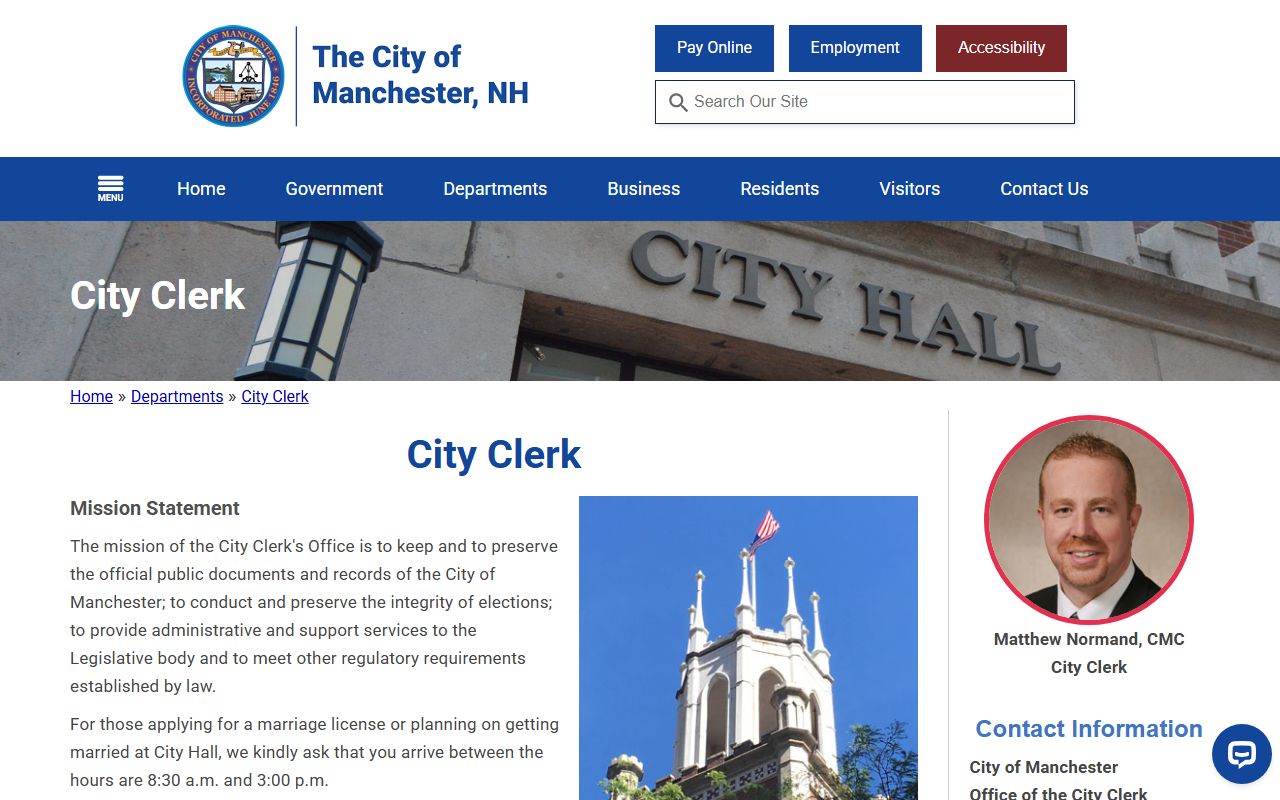
Hours and counter rules can change, so a quick call before a visit is smart. Some offices take walk-ins. Others ask both applicants to come together during set hours. Nashua is the other major office, and the Nashua City Clerk runs the same kind of marriage and vital-record desk.
See the counter and contact details at the Nashua City Clerk.

Smaller towns in the county issue licenses too. The process is the same. The fee, the hours, and the ID rules sit with each local office.
How to Apply for a Marriage License in Hillsborough County
The marriage license comes before the wedding, not after. Both people apply together at a city or town clerk and give the information the state needs for the vital record. The clerk checks ID, confirms eligibility, and issues the license. Here is the usual order of steps.
- Pick any New Hampshire city or town clerk that issues marriage licenses, such as Manchester or Nashua.
- Both applicants appear and bring government photo ID and the personal details the clerk asks for.
- Give prior-marriage details if either person was divorced, widowed, or had a marriage annulled.
- Pay the city or town clerk's current marriage-license fee.
- Receive the license and have the marriage solemnized by an authorized officiant.
- The officiant completes the license and returns it to the clerk for recording.
There is no blood test required for a New Hampshire marriage license. That step ended long ago. After the record is filed, certified copies are a separate request under the rules in RSA 5-C. Couples usually pay for those copies on their own. They are not always handed out at the ceremony.
Note: Fees and counter rules are set by each local clerk, so confirm the current marriage-license cost with the city or town office before you go.
Marriage License Application Fields
The marriage license form doubles as a vital record, so it asks for more than two names. The clerk needs birth details, parent information, and prior-marriage facts for the state file. Knowing the fields ahead of time speeds the visit. The table lists the common items both applicants provide.
| Field | Type | Required | Notes |
|---|---|---|---|
| Applicant 1 full legal name | Text | Yes | As shown on the photo ID. |
| Applicant 2 full legal name | Text | Yes | As shown on the photo ID. |
| Date of birth / age | Date | Yes | Used for eligibility and the vital record. |
| Place of birth | Text | Yes | City, state, and country. |
| Residence address | Text | Yes | Current home address of each applicant. |
| Parent names / birthplaces | Text | Yes | Required vital-record information. |
| Prior marriage status | Checkbox / text | Conditional | Divorce, death, or annulment details if any. |
| Identification | Document | Yes | Government ID; the local clerk sets exact proof. |
| Signature | Signature | Yes | Both applicants sign. |
| Fee payment | Payment | Yes | Verify the current city or town fee. |
Most fields are simple. The prior-marriage section is the one to prepare for. If a past marriage ended, the clerk may want the date, the place, and the decree or death record. Bring those papers.
Marriage Fees and ID for Hillsborough County
The marriage-license fee is set at the local level, not by the county or a single statewide number. Manchester, Nashua, and the smaller towns each post their own current cost. Check the clerk's fee page or call before you apply. Stale numbers cause trouble at the counter. Bring a government photo ID for each applicant.
A few rules cut across all offices. There is no blood test for a New Hampshire marriage license. Both applicants should plan to appear and sign. If either person was divorced, widowed, or had a marriage annulled, the clerk may ask for the date, the place, and supporting documents. Officiant rules come from state law, and the officiant must complete and return the license for it to be recorded.
Note: No dollar amount is listed here on purpose. Marriage-license costs differ by office and change over time, so confirm the fee directly with your city or town clerk.
Certified Copies of Hillsborough County Marriage Records
A certified copy is the version with the raised seal or official stamp that other agencies will accept. People need them for a name change, a passport, Social Security, or estate work. A plain printout will not do the job. Certified marriage copies move through the city or town clerk and the statewide vital-records system under RSA 5-C, which also sets who may request a record.
Access is not wide open. New Hampshire restricts vital records to people with a direct and tangible interest, such as the people named on the record, close family, a legal guardian, or an authorized representative. The clerk will ask for ID and may ask how the requester is tied to the record. Be ready to say the year and the city of the event. The statute that frames all of this is RSA 5-C.
Read the controlling marriage and vital-record law at RSA 5-C.
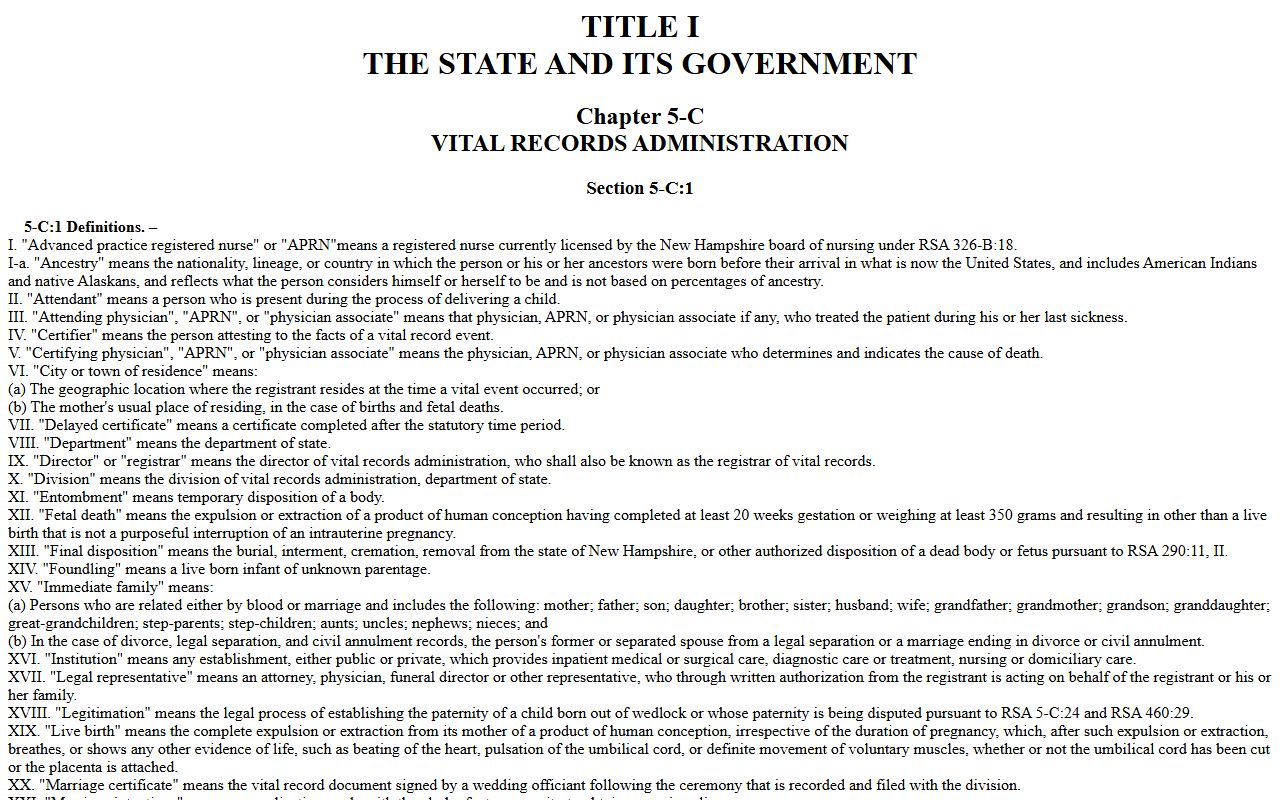
Statewide rules and the vital-records office sit with the New Hampshire Division of Vital Records Administration. That office and the local clerks share the marriage record after it is filed.
Hillsborough County Divorce Records and the Family Division
Divorce records are court records, not clerk-issued licenses. New Hampshire routes divorce cases through the Circuit Court Family Division. A marriage starts with a town clerk, but a divorce starts with a court filing and ends with a judge's decree. The Family Division holds the case file, sets hearings, and enters the orders that close the marriage.
A divorce file holds a lot more than the final decree. It can include the petition, financial affidavits, parenting plans, child-support worksheets, motions, and temporary orders. Some of that is open and some of it is not. Financial affidavits, parenting plans, child-support worksheets, and any domestic-violence material are sensitive and often restricted or redacted. The court protects income figures, account numbers, and details about children. A member of the public may see that a case exists, while the most personal documents stay sealed or limited by role.
Find court resources and forms at the New Hampshire Circuit Court Family Division.
Some non-confidential Circuit Court dockets show through the state Case Access Portal, but family access depends on case type and user role. When the portal does not show what you need, the next step is the Family Division clerk for the location that holds the case.
How to File for Divorce in Hillsborough County
Filing for divorce follows a set path through the Family Division. New Hampshire allows no-fault divorce on the ground of irreconcilable differences, and it also keeps fault grounds. Modern practice talks about parenting rights and responsibilities and parenting time, not the old word custody. The steps below show the usual flow from start to decree.
- Review the Family Division resources and forms on the Judicial Branch site.
- Confirm the residency and venue rules for where to file.
- Complete the divorce petition and the required financial and parenting forms.
- File the case in the correct Family Division location.
- Pay the filing fee or ask for a fee waiver if you qualify.
- Serve the other spouse, unless you file a joint petition or service is handled by rule.
- Attend temporary, mediation, case-manager, and final hearings as the court orders.
- Get certified copies of the final decree from the court clerk if you need them.
Joint petitions can move faster because both spouses agree to file together. Contested cases take longer. They may run through mediation before a final hearing, and the judge makes findings on property, support, and parenting. After the decree, later motions to modify or enforce create new records in the same case family.
What Hillsborough County Divorce Records Show
The divorce file is a stack of documents, and each one carries different access rules. Some parts may be viewable in a limited form. Others are guarded because they hold income, account, or child details. The table sorts the common documents and how public the access tends to be.
| Document | What It Holds | Access Note |
|---|---|---|
| Petition for divorce | Starts the case and states the relief requested. | May be accessible, subject to redactions. |
| Joint petition | Used when spouses file together. | May be accessible where allowed. |
| Financial affidavit | Income, assets, debts, and expenses. | Often sensitive and restricted. |
| Parenting plan | Decision-making and the parenting schedule. | May be restricted or redacted. |
| Child support worksheet | The support figure and the data behind it. | Sensitive financial and minor details. |
| Temporary orders | Support, residence, parenting, or no-contact terms while the case is open. | May be public in limited form. |
| Final decree | Ends the marriage and sets the final terms. | Certified copy may be requested. |
| Vital-record divorce abstract | The state vital-record summary of the divorce. | Comes through the RSA 5-C vital-record channel. |
The last row matters most for everyday requests. A vital-record divorce abstract is a short certified summary, not the full court file. People often need the abstract for a name change or remarriage, while the full file is for legal review.
Divorce Court Records vs. Divorce Vital Records
These two records share a name but do different jobs. The court file is the case. The vital record is the certified proof. Asking the wrong office wastes time. The table lines them up so you can pick the right source on the first try.
| Divorce Court Record | Divorce Vital Record | |
|---|---|---|
| Held By | Circuit Court Family Division | Vital-records system under RSA 5-C |
| Content | Petitions, affidavits, orders, full decree | Short certified abstract of the divorce |
| Access | Parts public, sensitive parts restricted | Limited to people with a direct interest |
| Common Use | Legal review, appeal, enforcement | Name change, remarriage, agency proof |
| How to Get It | Family Division clerk or the portal | Request and pay through vital records |
For most personal needs, the certified abstract does the job and costs less effort. For a contested or ongoing matter, the court file is the source that lawyers and parties rely on.
Legal Help for Hillsborough County Divorce Records
Divorce paperwork is heavy, and many people file without a lawyer. Free help exists. The New Hampshire Judicial Branch runs a self-help hub with forms and step guides for divorce, parenting, and fee waivers. Two legal-aid groups also screen for free or low-cost civil help. Start there first.
- NH Judicial Branch Self-Help for current forms and procedural guides.
- 603 Legal Aid for intake and referral on civil legal matters.
- NH Legal Aid for public legal information and resources.
Local forms can change, so the official self-help library is the safest place to pull the right version. If a case involves abuse, complex assets, or a parenting fight, talk to a lawyer or a legal-aid screener first.